
Raphael's Surgical Instruments Hub

Raphael's Surgical Instruments Hub
Raphael's Surgical Instruments Hub

OUR MISSION
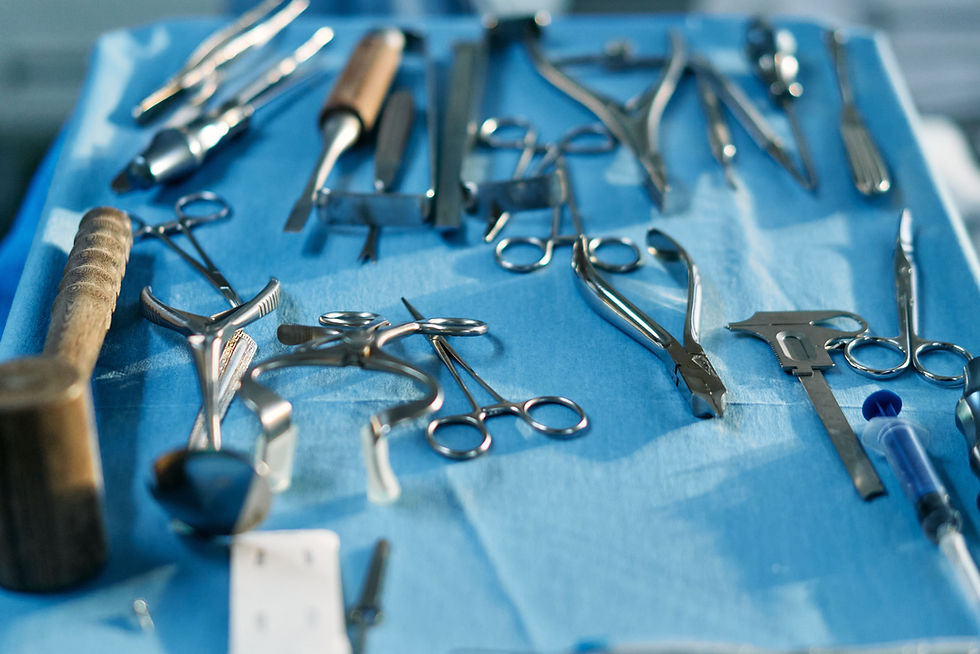
At Raphael’s Surgical Instruments Hub, our aim is to provide reliable and easy-to-understand information about surgical instruments for students, healthcare workers, and anyone interested in the field. This website is designed to serve as an educational resource that helps users identify different surgical instruments and understand their functions.
We aim to promote patient safety by increasing awareness of the role that sterile instruments play in preventing infections and supporting successful surgical outcomes. Every instrument used in healthcare settings has a specific purpose, and proper knowledge of these tools is essential for maintaining high standards of care. Through detailed descriptions, images, and educational content, this website seeks to make that knowledge more accessible.


Small, sharp, precision scissors (often straight or slightly curved) designed for fine work like cutting tendons or in delicate procedures. They have a more pointed tip.
Tenotomy Scissors

Metzenbaum Straight
Finer, more delicate scissors with longer, slender blades and a higher blade-to-handle ratio. Ideal for soft tissue dissection (e.g., in deeper surgical fields).
Mayo Curved
Same robust design as straight Mayo but with curved blades for better access and dissection in deeper or curved areas.


Mayo Straight
Heavy-duty scissors with straight blades, used for cutting denser tissues like fascia or sutures. Shorter, sturdier blades compared to Metzenbaum.
Surgical Scissors
High-quality surgical scissors for precise tissue dissection, suture cutting, and general surgical use.
Webster Needle Holder
A finer, more delicate needle holder with shorter jaws and smoother tips. Ideal for precision work with smaller needles, often in plastic, oral, or delicate tissue surgery.


Mayo-Hegar Needle Holder
A robust, versatile needle holder with a longer jaw and stronger grip. Often features serrated or tungsten carbide inserts for better needle control. Commonly used in general surgery for medium to larger needles.
Needle Holders
Surgical instruments designed to securely grip and guide suture needles for precise wound closure and suturing procedures.

Long-handled forceps with looped, serrated, or fenestrated oval tips. Primarily used to hold sponges, gauze, or for blunt dissection/cervix grasping.
Foerster Sponge Forceps

Delicate, gentle grasper. Commonly used for holding delicate structures like bowel, fallopian tubes, or appendix without crushing.
Babcock Clamp
Right Angle Clamp
Curved at 90 degrees at the tip for passing around structures like vessels or ducts. Excellent for dissection and ligation in deeper or confined spaces.

Rochester-Pean (Kelly Clamp)
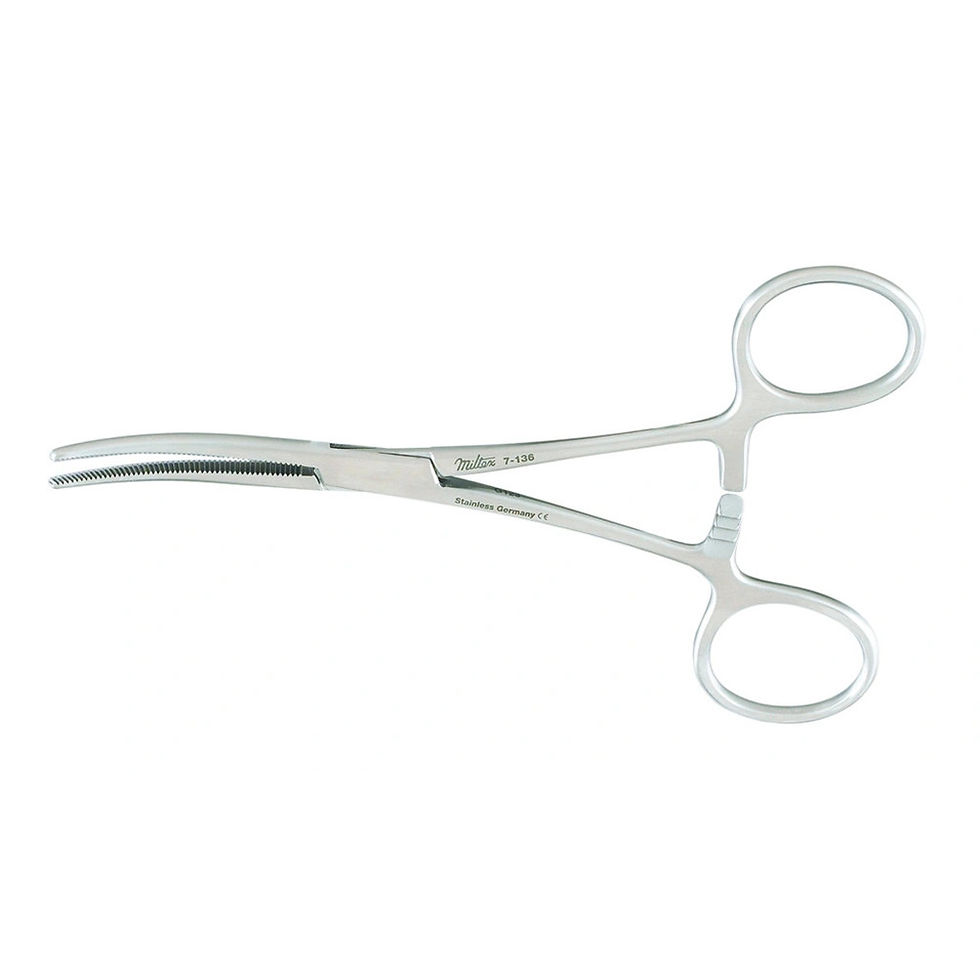
Heavy-duty crushing clamp with longitudinal serrations. Used for clamping larger vessels, tissues, or as a hemostat in general surgery. Often available straight or curved.
Surgical Clamps
Surgical clamps engineered to grasp, occlude, or secure blood vessels, tissues, and surgical materials during procedures.
#7 Knife Handle
Long, slender, and narrow - ideal for fine, delicate, or deep work (e.g., plastics, ENT, neurosurgery). Typically, 6.25" long.


#3 Knife Handle
The most common standard handle. Flat, ergonomic design for precise control. Comes in 5" and 8.5" lenghts.
Knife Handles
Durable surgical knife handles designed to securely hold scalpel blades for controlled and precise incisions.

Ferris Smith Tissue Forceps
Heavy-duty tissue forceps with broad, strong tips featuring interlocking teeth or a cross-serrated platform. Excellent for grasping dense or fibrous tissues.

For grasping tissue , especially skin when closing incisions.Typically, 4.75" long.
Adson Tissue Forceps

Adson Brown Forceps
Similar shape to Adson Dressing but with multiple fine teeth.Typically, 4.75" long.

Adson Dressing Forceps
Fine, serrated tips without teeth. Used for holding sutures, or delicate tissues with minimal trauma.Typically, 4.75" long
Forceps
Precision instruments used to grasp, hold, manipulate, and handle tissues or materials during surgical procedures.

Debakey Vascular Forceps
Atraumatic forceps with longitudinal serrations. Ideal for handling delicate vessels, organs, or tissues without crushing (widely used in cardiovascular and general surgery).
Fine, serrated tips without teeth. Used for holding and manipulating dressings, sutures, or delicate tissues with minimal trauma.

Bonney Tissue Forceps
Robust forceps with coarse, toothed tips designed for strong gripping of heavy tissues or fascia.
Frazier Suction
Fine, narrow, and often angled with a thumb-controlled hole for precise suction control. Commonly used in neurosurgery, ENT, and delicate procedures. Includes a stylet for clearing blockages.


Yankauer Suction
The most widely used suction tip. Features a rounded distal end with multiple holes. Ideal for general-purpose oral/pharyngeal and intra-abdominal suction.
Suctions
Surgical suction instruments designed for efficient removal of blood, fluids, and debris to maintain a clear operative field.

Double-ended retractor with strongly curved blades of different widths. Excellent for abdominal or pelvic retraction, providing good exposure with less trauma.
Goelet Retractor

Larger, deep retractor with a right-angled or curved blade and often a loop handle for better grip. Used for retracting heavier tissues or in deeper incisions.
Kelly Retractor
Army-Navy Retractor
Double-ended, versatile retractor with different blade widths on each end. Commonly used in pairs for superficial wound retraction in general surgery.


Senn Retractor
Small, double-ended retractor with one blunt L-shaped blade and one end with 2–3 prongs (sharp or blunt). Ideal for superficial retraction in hand, plastic, or minor procedures.
Retractors, Handheld
Surgical retractors engineered to hold back tissues and organs, providing enhanced visibility and access during procedures.
Gelphi
The Gelpi Retractor is a self-retaining tissue retraction for use during surgical procedures. Self-retaining retractors remain in place once they are positioned, freeing your hands. The retractor has two sharp, hooked ends that are used to grasp and retract tissue.


Weitlaner
A Weitlaner Retractor is a self-retaining, handheld surgical instrument used to hold soft tissues apart during surgical procedures to give the surgeon access to the site. The retractor is self-retaining, meaning it remains in place once it is positioned, freeing your hands.
Retractors, Self-Retaining
Surgical retractors engineered to hold back tissues and organs, providing enhanced visibility and access during procedures.
Power Handpiece
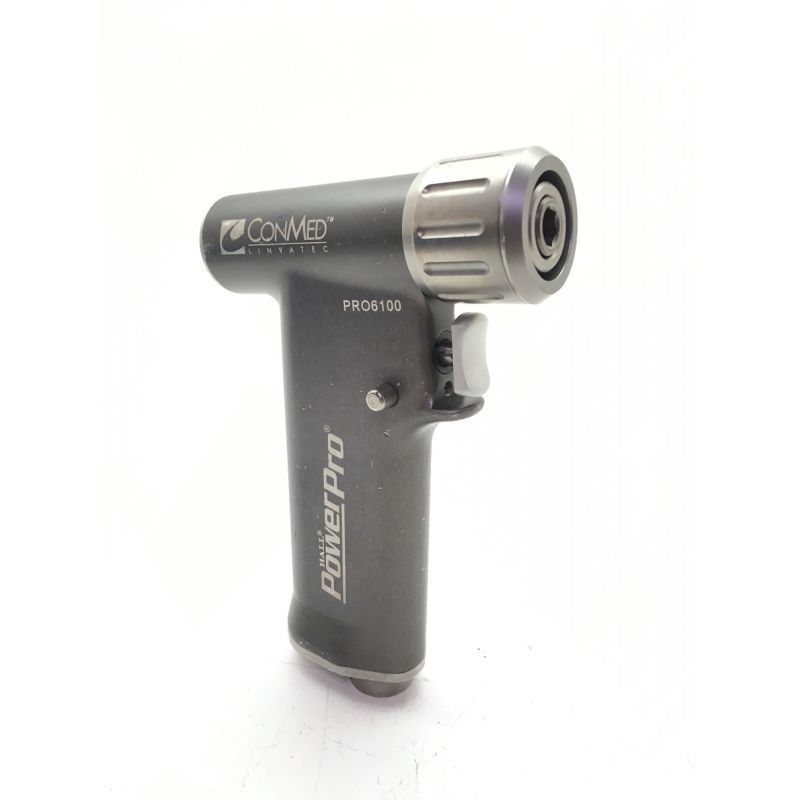
A handheld, motorized surgical instrument used in operating rooms to drill, saw, or screw into bone and tissue. Primarily utilized in orthopedic, trauma, and ENT procedures. These highly durable devices are powered by detachable rechargeable lithium battery.

Flexible Scope
Long, maneuverable insertion tube with a deflectable tip, video camera, light guide, and working channels. Used for GI endoscopy, bronchoscopy, etc.

Rigid Scope
Straight, rigid metal tube with high-quality rod-lens optics.For viewing body cavities.Typically 4–10 mm diameter with various viewing angles (0°, 30°, etc.).
Complex Instruments
Surgical instruments engineered to make the surgical process as error free and painless as possible for all involved.
Testimonials
What Our Users Say
Real feedback from SPD Students and professionals who are learning and growing with us.

James Bernard. - SPD Student
This website is exactly what every SPD student needs. Everything is organized by instrument type, making it simple to study and review before quizzes and practical assessments
Derrick Haith. - SPD Student
This website made learning surgical instruments much easier for me. The pictures and descriptions are simple, clear, and easy to remember when studying for class.
Niah Brooks. - SPD Student
Learning surgical instruments used to be overwhelming, but this website made it much easier. The clear pictures and detailed explanations helped me identify instruments faster and feel more confident during class.
Blanca Rodriguez. - SPD Student
The practice quizzes and high-quality instrument images helped me recognize instruments much more quickly. I now feel more prepared for my certification exam.
Heather Carter, CRCST,F.A.S.T. - SPD Instructor
I appreciate the effort put into creating a resource that encourages students to learn more about surgical instruments. The content is educational, well-presented, and supports independent study.